
Checking Criminal History in Los Angeles County
No single official search returns every Los Angeles County criminal record. Start with the record type and date. A filed charge belongs to the Superior Court of California, County of Los Angeles. Current or recent county custody belongs to the Los Angeles County Sheriff's Department. An incident report stays with LAPD, Long Beach Police, an LASD station, or the other agency that took it. A person reviewing their own statewide rap sheet must use California Department of Justice Record Review through Live Scan.
Before searching, collect the full name, date of birth when lawfully available, spelling variants, case number, booking number, incident date, and arresting agency. These details reduce common-name mistakes in a county of nearly ten million people. Then follow a channel-complete sequence:
- Search the Los Angeles Superior Court criminal index for a filed case or case number.
- Check LASD custody records or call the custody line when the event is recent.
- Request the police report from the agency that created it.
- Use CDCR CIRIS after a transfer to state prison.
- Use DOJ fingerprint Record Review for your own official California history.
No Single Los Angeles County Record Search
The main trap is treating a case index, jail roster, and rap sheet as interchangeable. They answer different questions. The Superior Court records the filed complaint, hearings, disposition, and sentence. LASD records jail intake and custody. Police agencies retain incident narratives. DOJ compiles fingerprint-linked arrest cycles and reported outcomes, but California does not open that repository to public name searches. CDCR takes over state-prison and parole information.
The official LASD home page shows the department's custody and public-information routes.
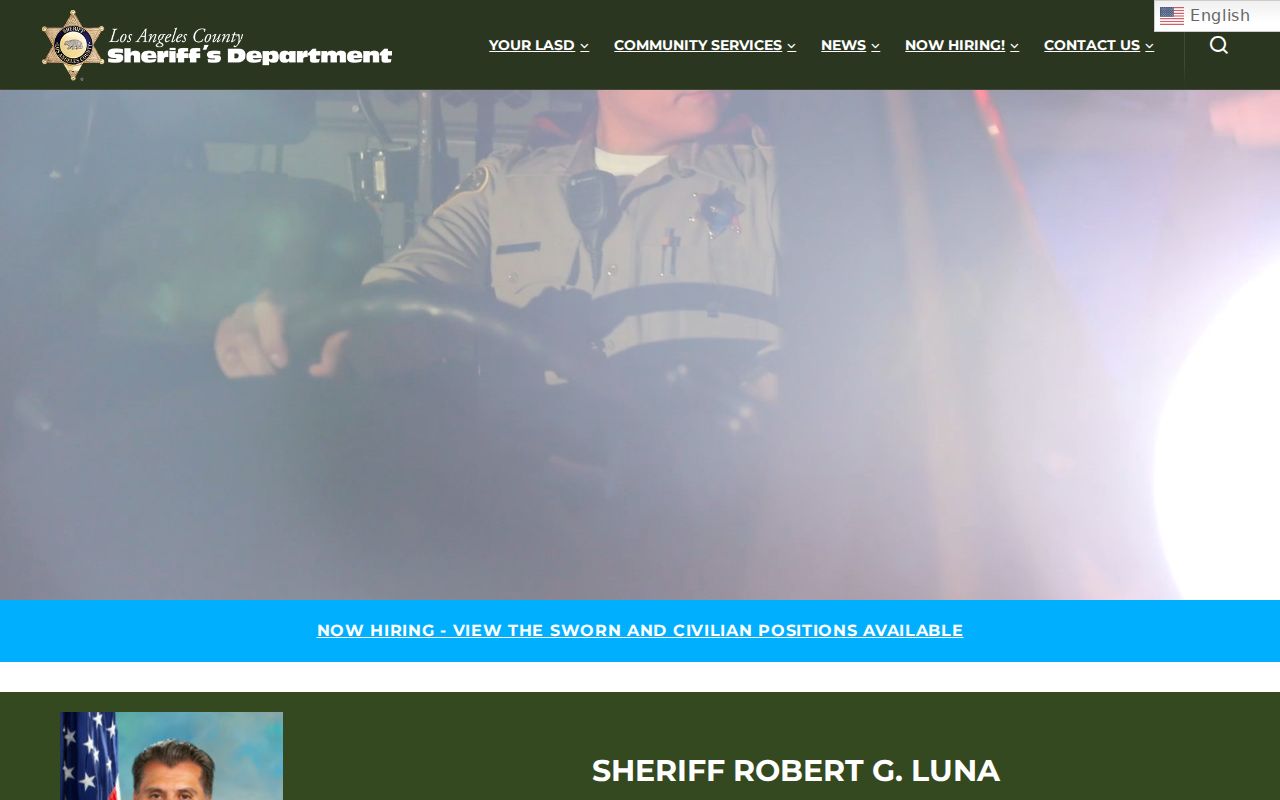
That sheriff channel is one part of the Los Angeles County record map, not a full county criminal history search. If one source has no result, do not assume no record exists. Filing delays, transfers, sealing, agency boundaries, and name variations can each explain a gap.
| Question | Official channel |
|---|---|
| Was a criminal case filed? | Los Angeles Superior Court Criminal Case Access or clerk |
| Is someone in county custody? | LASD Inmate Information Center or 213-473-6100 |
| What does my state rap sheet show? | California DOJ Live Scan Record Review |
| Was the person sent to state prison? | CDCR CIRIS |
| Is public registry information available? | California Megan's Law Website |
California Official Background Checks
California Department of Justice, Bureau of Criminal Information and Analysis, holds the state summary criminal history repository. It offers no general-public name search. A person may review their own California record by completing the BCIA 8016RR form, taking valid photo identification to an authorized Live Scan provider, submitting fingerprints, and paying the required charges. The DOJ processing fee is $25. A fee waiver may be available to qualifying California residents.
The California DOJ Record Review instructions explain this subject-only process.
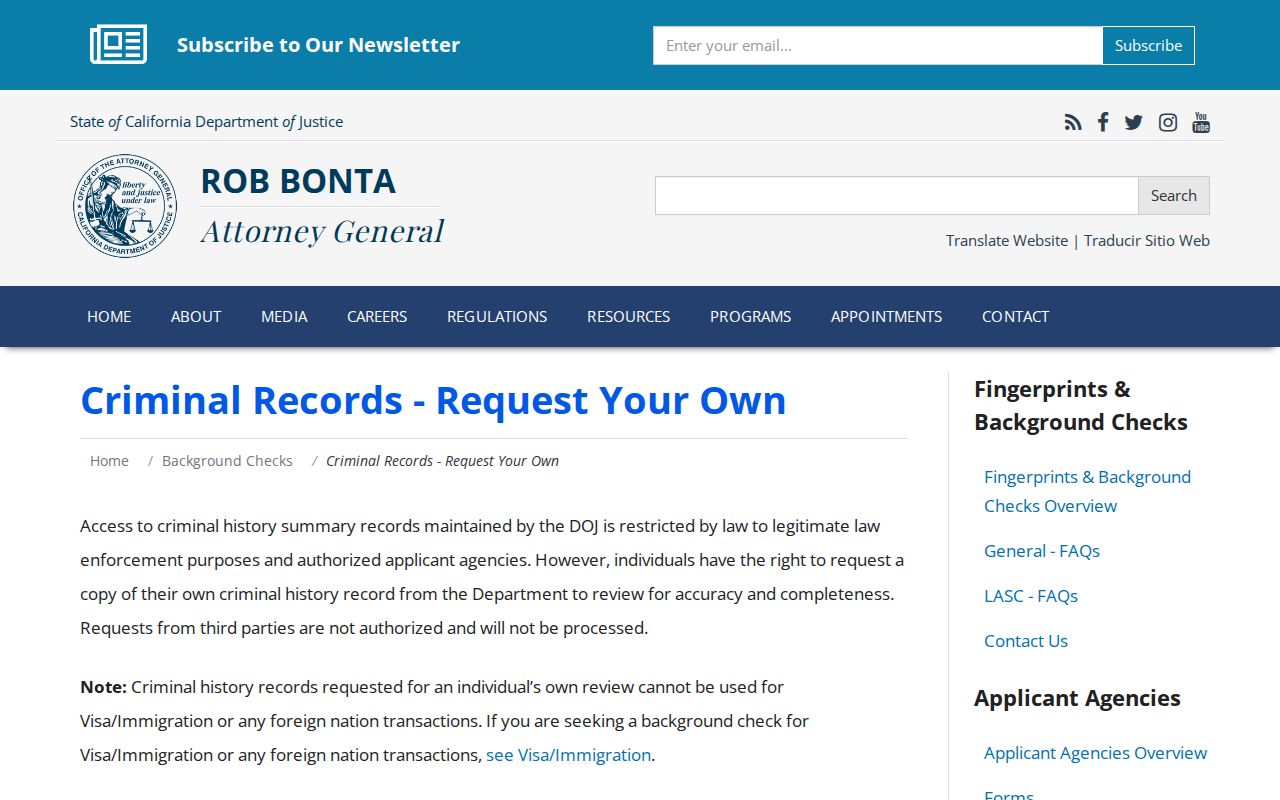
This fingerprint route is the authoritative way to inspect your own statewide DOJ record, including arrest cycles and dispositions received by the repository. It is distinct from a Los Angeles County court search and must not be treated as a public screening product.
The DOJ Live Scan location search lists approved providers, hours, payment methods, and rolling fees by county.
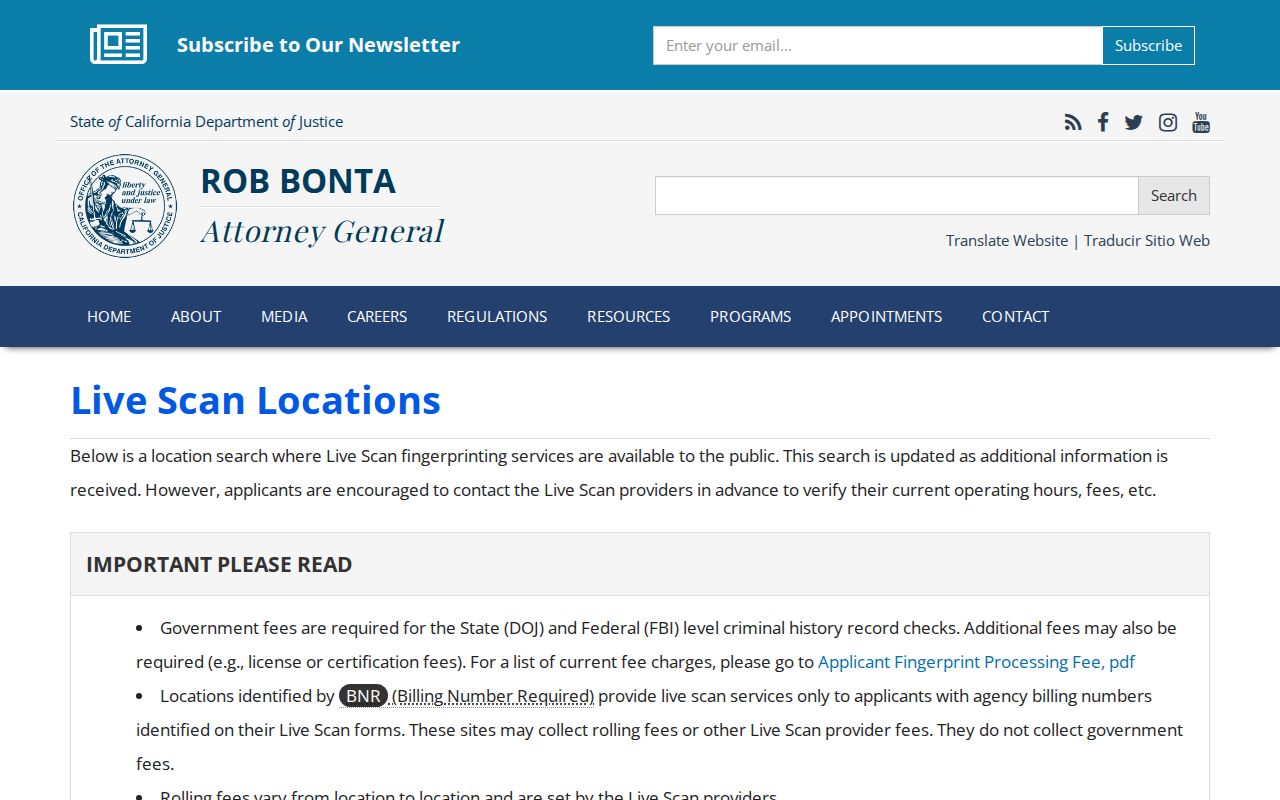
Provider charges vary even within Los Angeles County, so confirm the current rolling fee, hours, identification rules, and appointment policy before visiting.
| DOJ processing | $25 for personal Record Review, unless an approved waiver applies |
|---|---|
| Rolling fee | Set by each Live Scan provider and added to government fees |
| Identification | Valid, unexpired photo identification is required |
| Form | BCIA 8016RR Request for Live Scan Service |
Los Angeles County Criminal Case Access
The Los Angeles Superior Court provides Criminal Case Access and a Public Access Online Services Criminal Defendant Index. The defendant index can locate a criminal case number by name. Case-number access can then show available case activity. The court warns that web information is not an official court record, so identity and outcomes should be checked against clerk-held records or official copies.
The LASC Criminal Case Access page displays that search and accuracy warning.
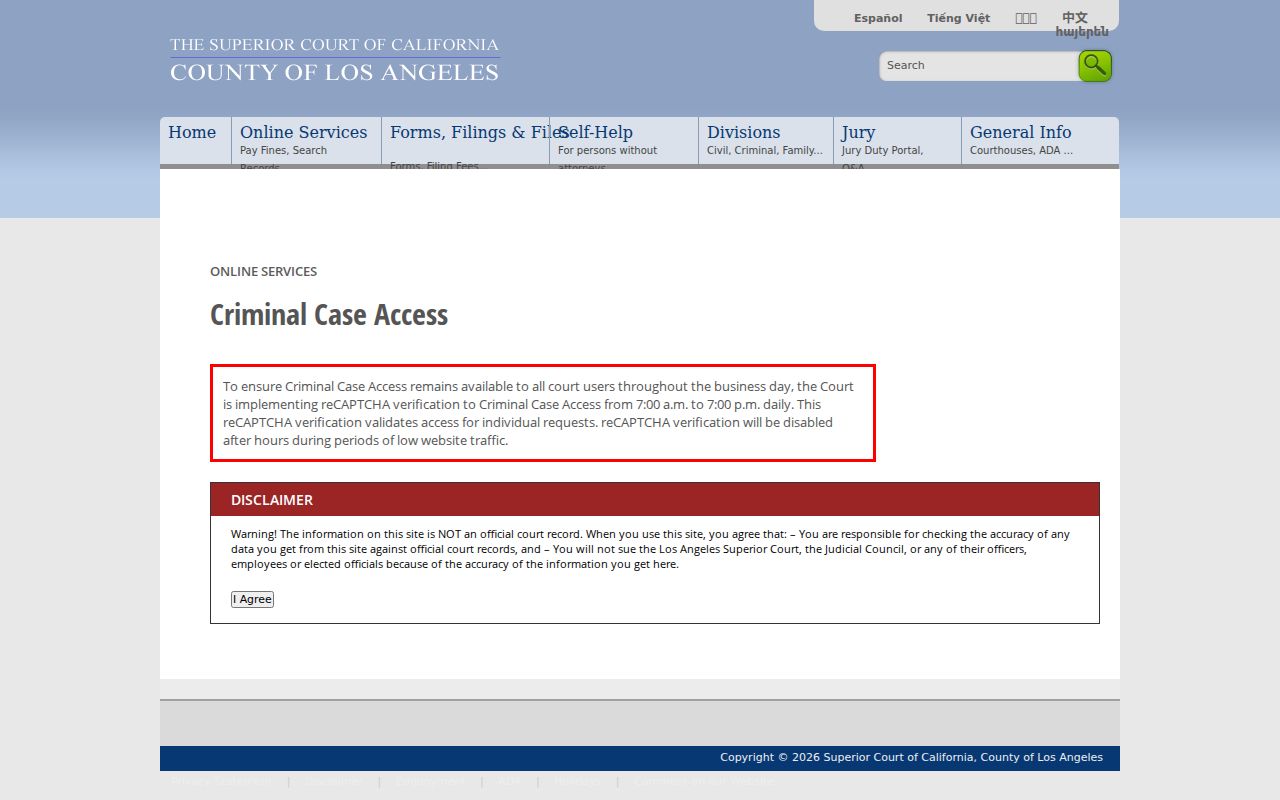
The warning matters when names are common or a docket is incomplete. Search by case number when possible. For older files, certified copies, or a web result that does not resolve the issue, contact the assigned courthouse or clerk rather than relying on the summary.
| Search field | How it helps |
|---|---|
| Defendant name | Finds a possible criminal case number; verify the person's identity |
| Case number | Targets one court file and avoids many name-only matches |
| Court location | Identifies the courthouse that can provide official records |
| Case status or events | Shows available activity, subject to the court's disclaimer |
Los Angeles County Criminal Record Types
A Los Angeles County criminal record can mean several documents created at different stages. The arresting agency writes the incident or arrest report. A jail creates the booking record. The prosecutor's filed charges create a court case. California DOJ collects fingerprint-linked state history. Each source can contain facts that the others do not, and each has its own access limits.
- Police reports: narratives and incident details held by the reporting agency.
- Booking records: intake, charges, holds, bail, and custody data held by LASD or a city jail.
- Court case files: complaints, hearings, pleas, dispositions, and sentences held by LASC.
- State rap sheets: DOJ summaries available to the subject through fingerprint review.
- Warrants and supervision: court, probation, LASD, and CDCR records with limited public access.
The LASD Records and Identification Bureau FAQ describes sheriff record-request routes.
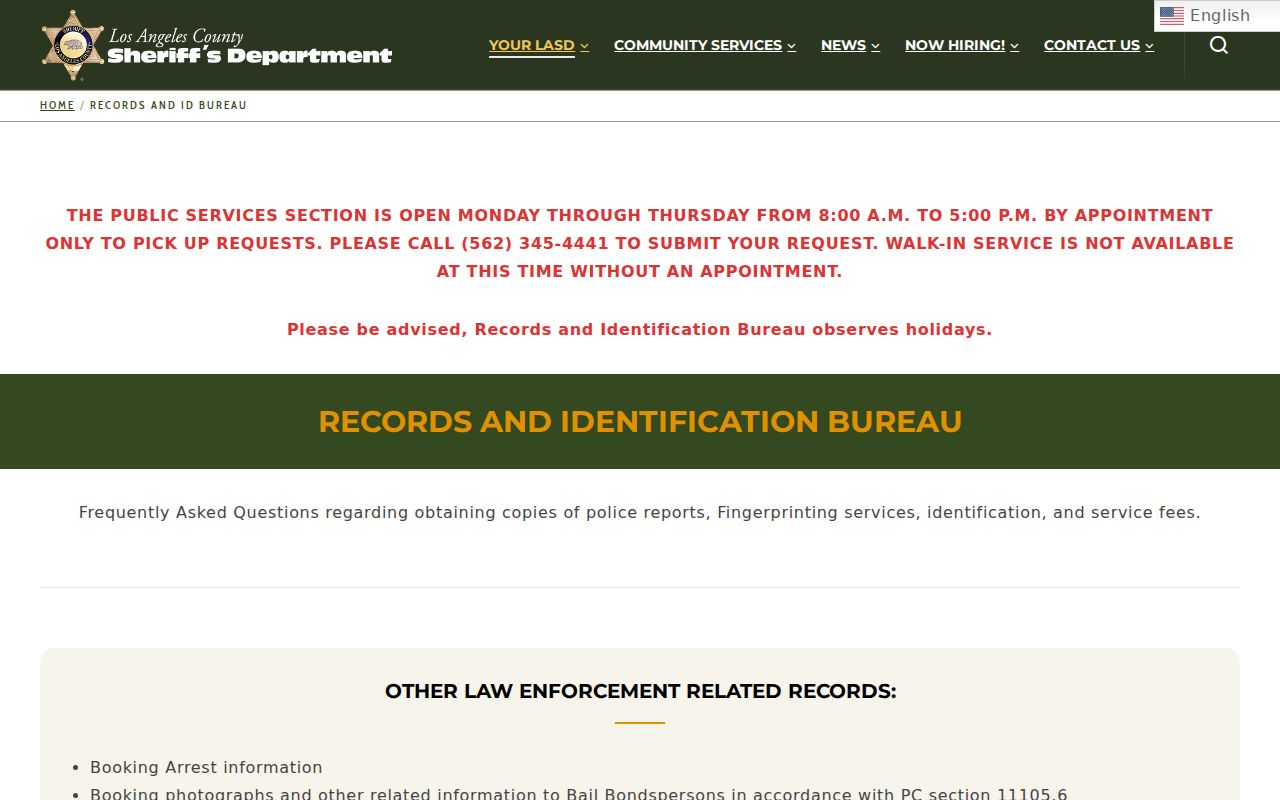
This bureau can help route LASD-held reports and records, while court documents still belong with LASC and city police reports stay with their city agency.
Los Angeles County Jail Record Channels
For a recent arrest, the LASD Inmate Information Center is often the first practical stop. Search fields include last name, first name, middle name, date of birth, and booking number when known. A result may show a booking number, intake date, custody facility, public charge information, bail or hold data, court routing, and release status. Sensitive medical, juvenile, mental-health, and protective-custody details are not public.
The LASD Inmate Information Center provides the official county custody search.
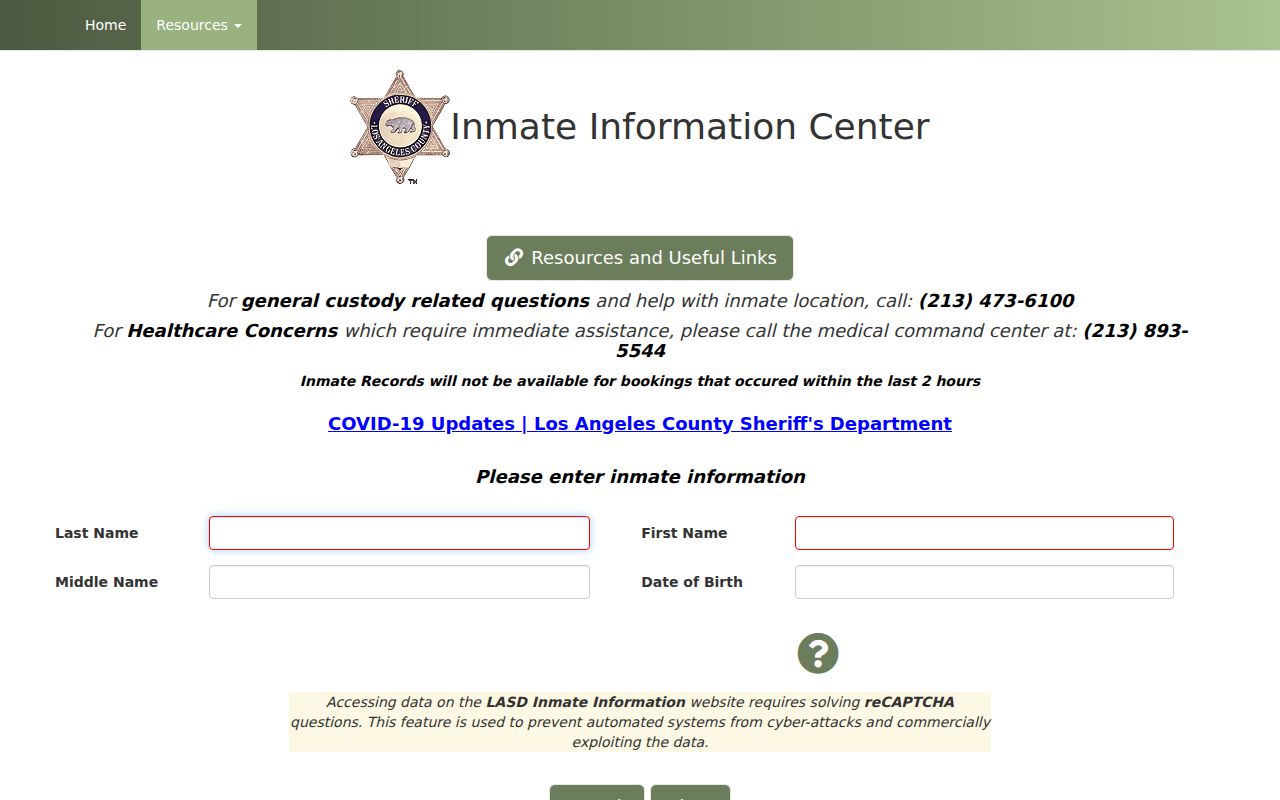
A blank search does not settle the matter. Call 213-473-6100 at any hour for LAPD or LASD custody information. Booking copies, custody incidents, older incarceration data, and statistics may require LASD Records or a custody CPRA request to csspra@lasd.org. After a state-prison transfer, the correct channel changes.
The CDCR California Incarcerated Records and Information Search covers people in state custody.
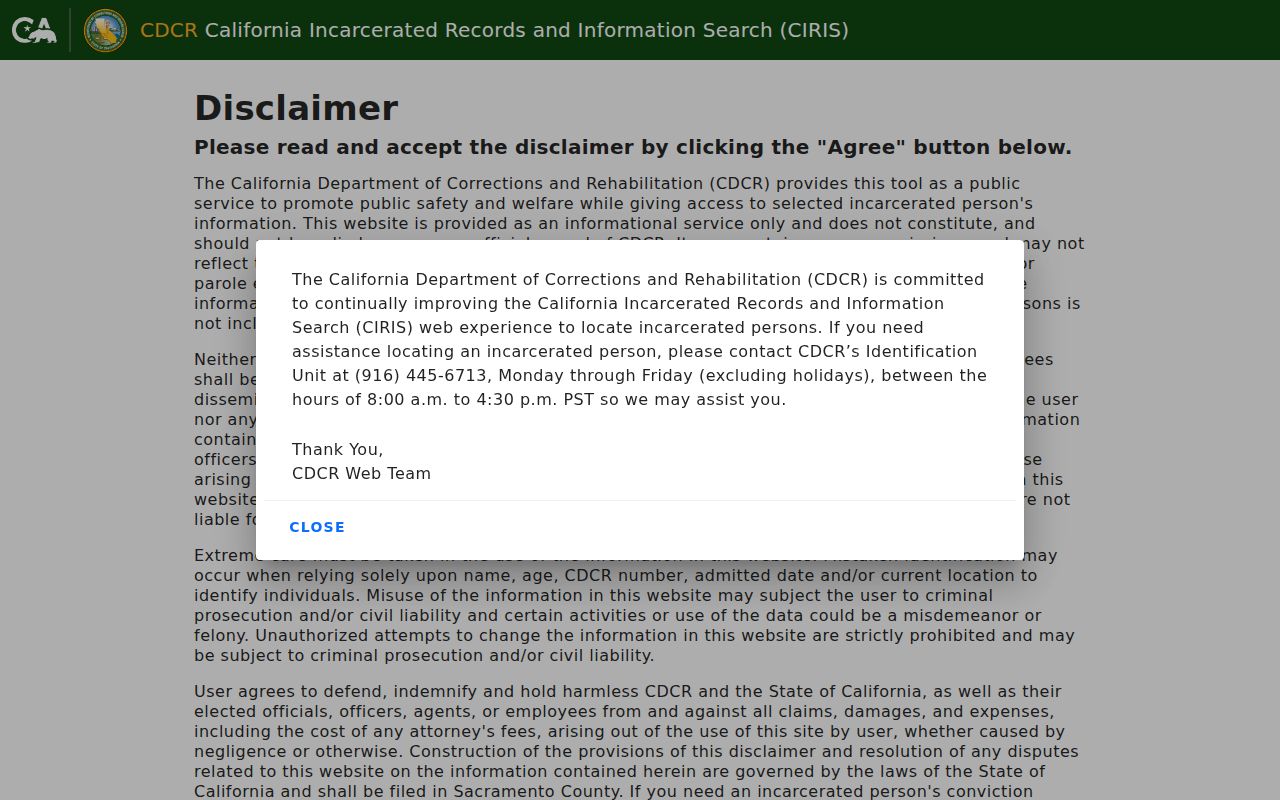
CIRIS follows the state correctional system, not Los Angeles County jail bookings. CDCR lists its Identification Unit at (916) 445-6713 for locator help.
Inside a Los Angeles County Criminal Record
Fields depend on the source. A court summary centers on case number, courthouse, filing status, hearings, disposition, and sentence. A booking record centers on intake and custody. A DOJ record can connect fingerprinted arrest cycles to reported court outcomes. Compare identifiers before treating two entries as the same person, and distinguish an arrest charge from the prosecutor's later filed count.
| Name and identifiers | Name, aliases, birth date or physical details where release is lawful |
|---|---|
| Arrest and booking | Agency, arrest date, booking number, custody site, initial charges, and holds |
| Charges and statutes | Counts at arrest or as later filed by the prosecutor |
| Disposition | Conviction, dismissal, acquittal, or diversion outcome after court action |
| Sentence | Custody, probation, fines, restitution, and other court orders where public |
| Supervision | Los Angeles County Probation or CDCR parole status through authorized channels |
Arraignment is the first hearing where charges are stated and a plea or release issue may be addressed. A disposition is the outcome. A minute order is the clerk's summary of a hearing, while a register of actions lists case events in time order.
Los Angeles County Record Accuracy Gap
In February 2026, LASC disclosed an Arrest Disposition Report backlog involving about 464,000 reports and roughly 408,000 people. The court said a programming issue had failed to flag reporting errors. This is a concrete reason a court file and California DOJ history may not match at the same moment. The court can show an outcome that has not yet reached the state repository.
If your own DOJ record lacks a disposition or shows inaccurate court information, compare it with the official LASC file. DOJ directs record-review applicants to identify missing or wrong data and follow up with the court where the case occurred. Court correction comes first; the corrected disposition can then be sent through the official reporting path. Do not infer that a missing state update erased the underlying case.
Public Access Laws in California
California law balances public access with privacy, court sealing, investigation needs, and control of state criminal-history information. The California Public Records Act applies to agency-held public records, but exemptions and redaction rules still matter. Court access follows separate rules, and DOJ's state rap sheet is controlled criminal-offender record information rather than a public name database.
Key laws:
Government Code section 7920.000 et seq. establishes CPRA access to nonexempt agency records.
Penal Code section 11105 controls California DOJ summary criminal history.
California Rule of Court 2.503 governs reasonable electronic access to court records.
Penal Code section 290.46 defines what Megan's Law may display and limits use.
Penal Code section 851.91 permits sealing for many arrests without conviction.
Los Angeles County says CPRA requests must go to the department that holds the record. An agency generally has ten calendar days to determine whether a request seeks disclosable records. That is a determination period, not a promise that a complex production will be complete in ten days.
Los Angeles County Crime Data Context
Crime dashboards describe trends, not a person's criminal history. California DOJ OpenJustice publishes statewide and local agency data. LASD supplies ten full years plus the current year of Part 1 statistics for sheriff-served areas. LAPD offers COMPSTAT and mapping tools, while Long Beach Police runs a city and neighborhood Criminal Incident Dashboard. Agency boundaries must be respected when comparing totals.
The California DOJ OpenJustice crime explorer provides the state data layer.
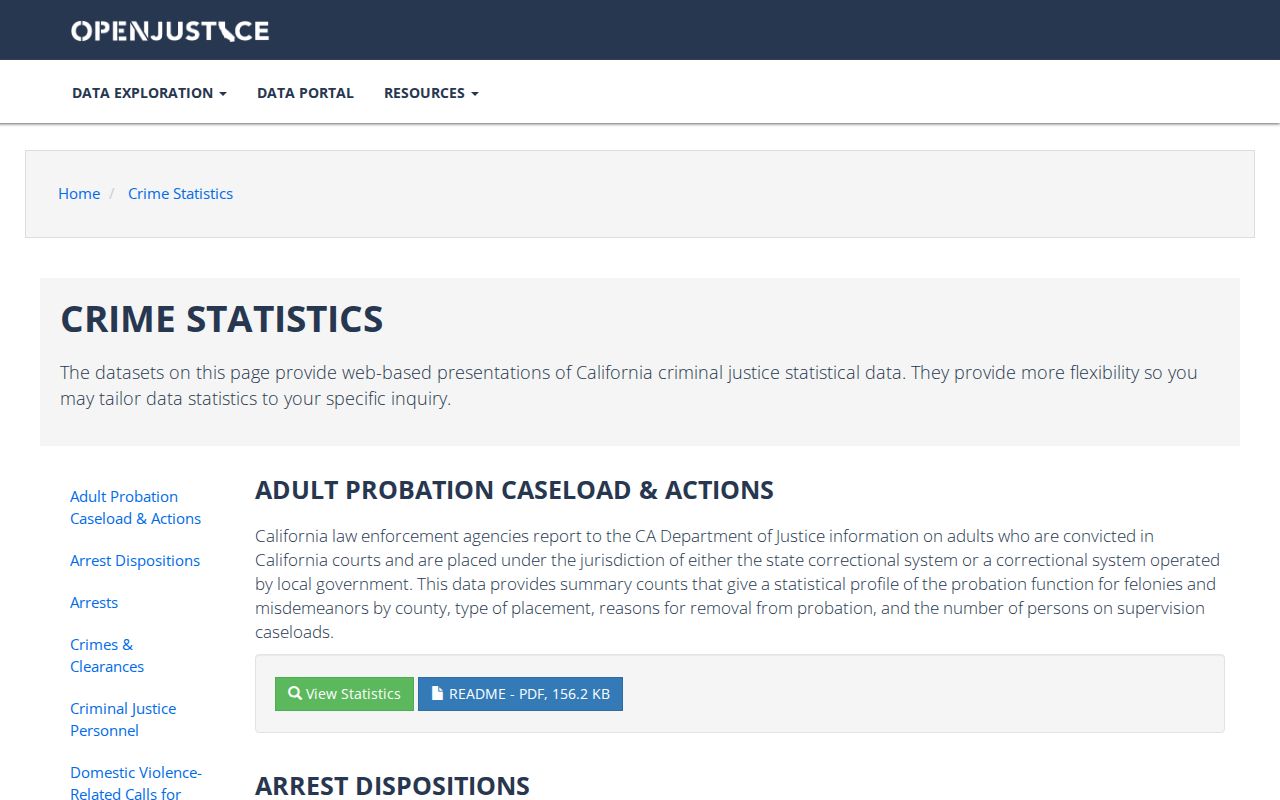
OpenJustice is useful for county and agency context, but it cannot confirm whether a named person has an arrest or conviction. California's 2024 report showed statewide declines in violent crime, property crime, homicide, robbery, burglary, aggravated assault, and vehicle theft, while arson rose. Those statewide changes should not be assigned to one Los Angeles County city without checking its agency data.
Sealed, Expunged, and Restricted Records
California Courts uses “clean your record” because relief is not always literal destruction. Many arrests that did not lead to conviction may qualify for sealing under Penal Code section 851.91. Eligible probation cases may receive a dismissal under section 1203.4. Juvenile files, victim information, personal identifiers, and protected health details have separate confidentiality rules.
Start by reviewing your own DOJ record and the official Los Angeles Superior Court file. The court outcome identifies the case number, sentence status, and possible relief. California Courts provides Petition for Dismissal form CR-180 for qualifying matters. After the court grants relief or fixes a disposition, follow the DOJ correction process if the state record has not updated. A dismissal does not mean every historic document vanishes, and a sealed arrest may still be available to agencies that have legal authority.
Los Angeles County Registry Records
California Megan's Law is a statewide DOJ service, not a county-run criminal history database. It can search by name, address, city, ZIP Code, or county after the user accepts lawful-use terms. Not every registrant appears publicly. Some profiles show a full address, some show only a ZIP Code, and California law excludes other records from web display.
The California Megan's Law Website opens with its search limits and use disclaimer.
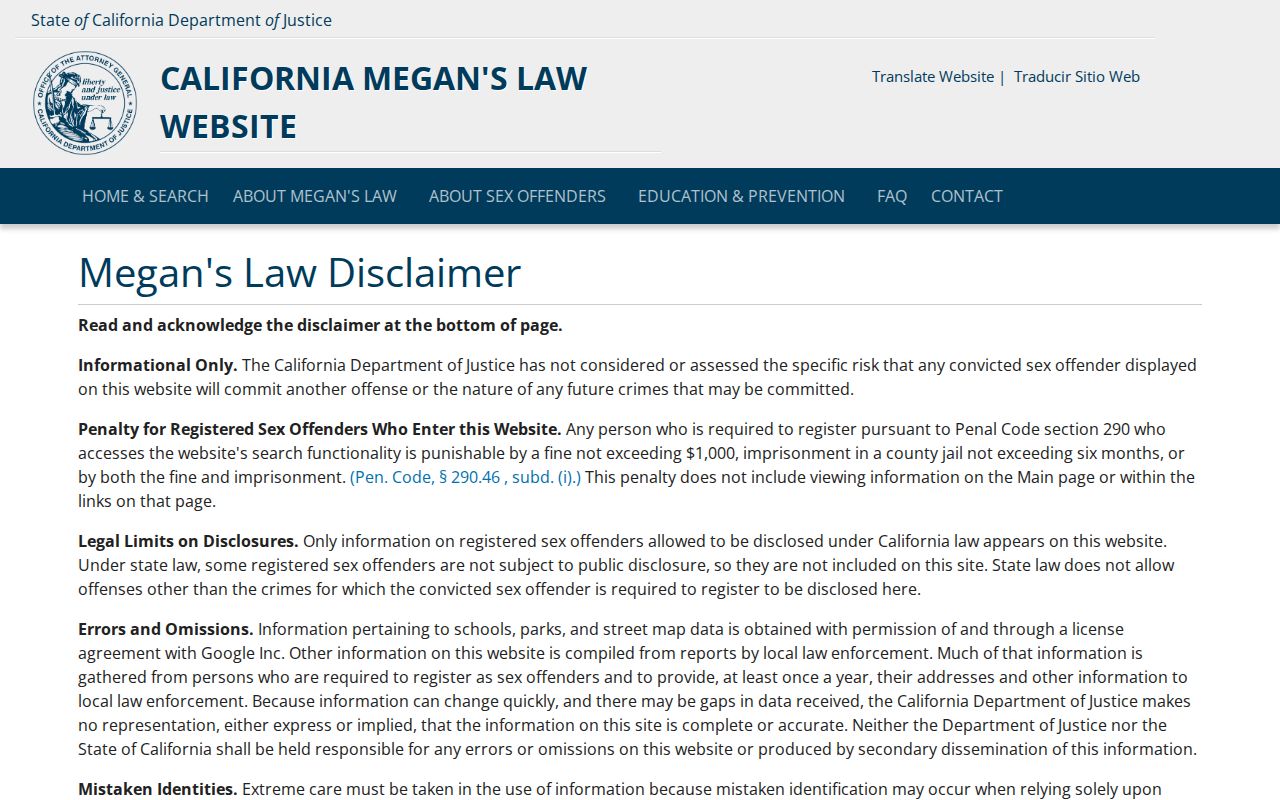
Law enforcement updates the database daily, but public display remains limited by Penal Code section 290.46. Registry data must not be used for threats, harassment, vigilantism, or unlawful discrimination. Local registration duties go to LAPD, LBPD, LASD, or another police agency based on residence. For deeper registry procedures, use the Los Angeles County sex offender search.
Los Angeles County Criminal Record Custodians
The downtown justice campus puts several offices within blocks, yet each remains a separate custodian. The Foltz Criminal Justice Center holds court files. LASD headquarters, jail intake, and central custody facilities sit nearby. The District Attorney decides what counts to file, while defense offices represent accused people. Physical closeness does not merge their records or authorize one counter to release another office's file.
The Los Angeles County District Attorney site identifies the county prosecution office and its operations.
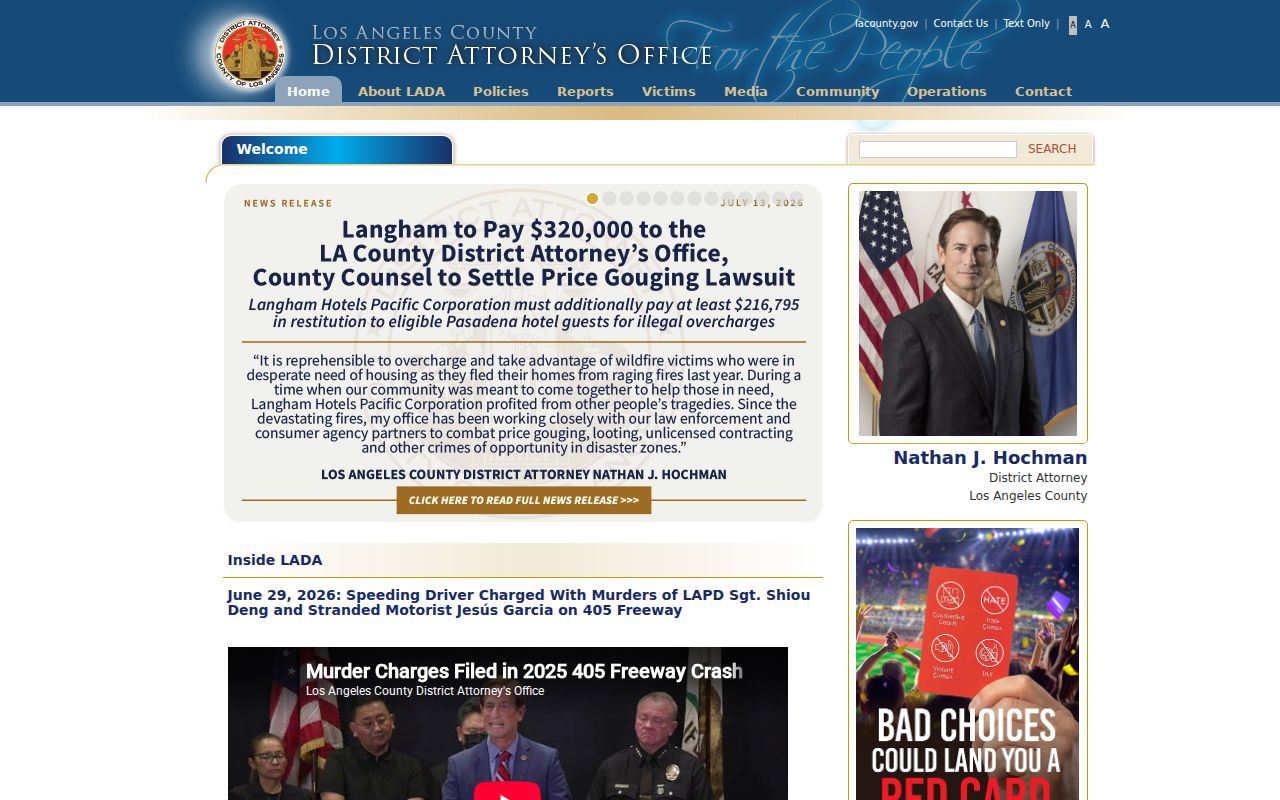
A prosecutor's announcement is not a substitute for the filed court record. Use the office cards to route the underlying request.
Los Angeles Superior Court
Criminal case indexes, dockets, minute orders, dispositions, and official copies through the assigned courthouse.
LASD Records and Identification
Report requests: (562) 345-4470. Records and ID: (562) 345-4441. General questions: (562) 345-4426, weekdays 8:00 a.m. to 5:00 p.m.
California DOJ BCIA
Subject-only state criminal-history review by Live Scan, with provider search and fee-waiver information.
Los Angeles County Criminal Records by City
City routes differ sharply. LAPD and the City of Los Angeles use city records channels. Long Beach has its own police reports, records desk, blotter, and incident dashboard. Santa Clarita contracts with LASD, so criminal reports belong with the Santa Clarita Valley Sheriff's Station or LASD Records rather than a city police department. All three cities send filed criminal cases into Los Angeles Superior Court.
Los Angeles Criminal Records
Population 3,857,263. LAPD reports, city NextRequest, county custody, and LASC case channels.
Long Beach Criminal Records
Population 455,548. LBPD records and dashboards connect to LASD custody and LASC cases.
Santa Clarita Criminal Records
Population 230,221. LASD Santa Clarita Valley Station provides contract law enforcement.